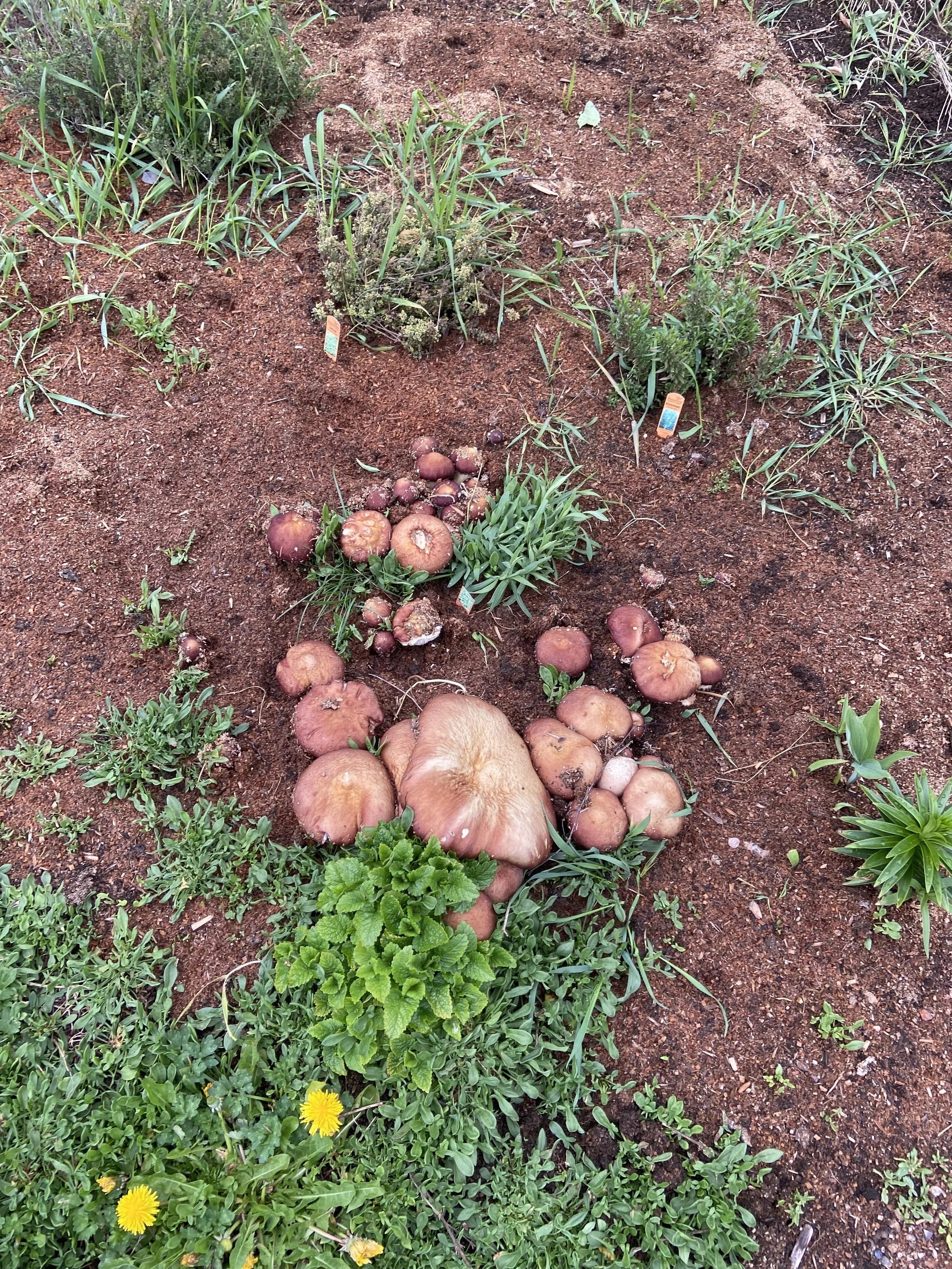
King Stropharia
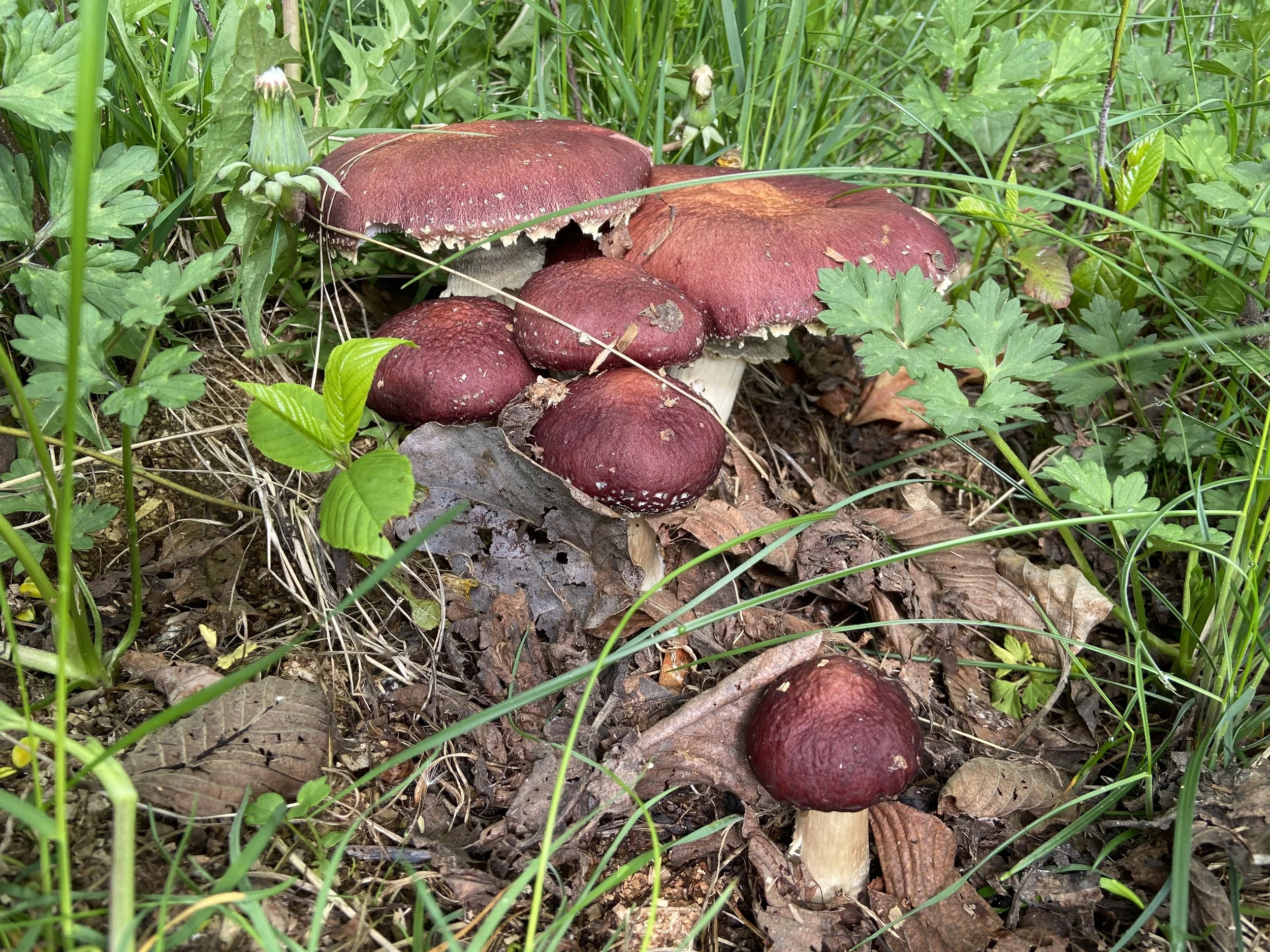
King Stropharia “Wine Cap” “Garden Giant” is a wonderful addition to your garden or perennial beds. These mushrooms are simple to grow and fruit in large clusters or singularly which is mostly determined by the environment you grow them in, and the age of the “planting”. These mushrooms generally fruit in the fall the first year they are planted, but depending on the dryness/warmth of the spring and early summer you can get mushroom production in the early summer as well.
Hardwood chips, softwood chips, sawdust mixtures, wood chip mixtures, straw and combinations of all these work well to grow these mushrooms. Keep in mind the more substrate you give them the more mushrooms they will produce. The denser the substrate (i.e. wood chips vs sawdust) the longer the mycelium will last. Yes, you can have conifer chips mixed in, but the mycelium will not grow on pine/fir etc. Getting ahold of chips can be challenging depending on where you live, so checking with local nurseries and arborists can be very helpful in tracking some down. A farm store in the area will always have straw, and it is very cheap by the bail and the Stropharia grows well on it.
The mycelium bedding likes the heat of direct sun but wants to produce mushrooms in shade or dappled sunlight which is why it is perfect for gardens. It also needs to be regularly watered, however, the deeper and denser the substrate the less you need to water it. And the mycelium acts as a sponge for your garden, holding onto the water for much longer than soil or top dressing by itself.
Printable instructions here.
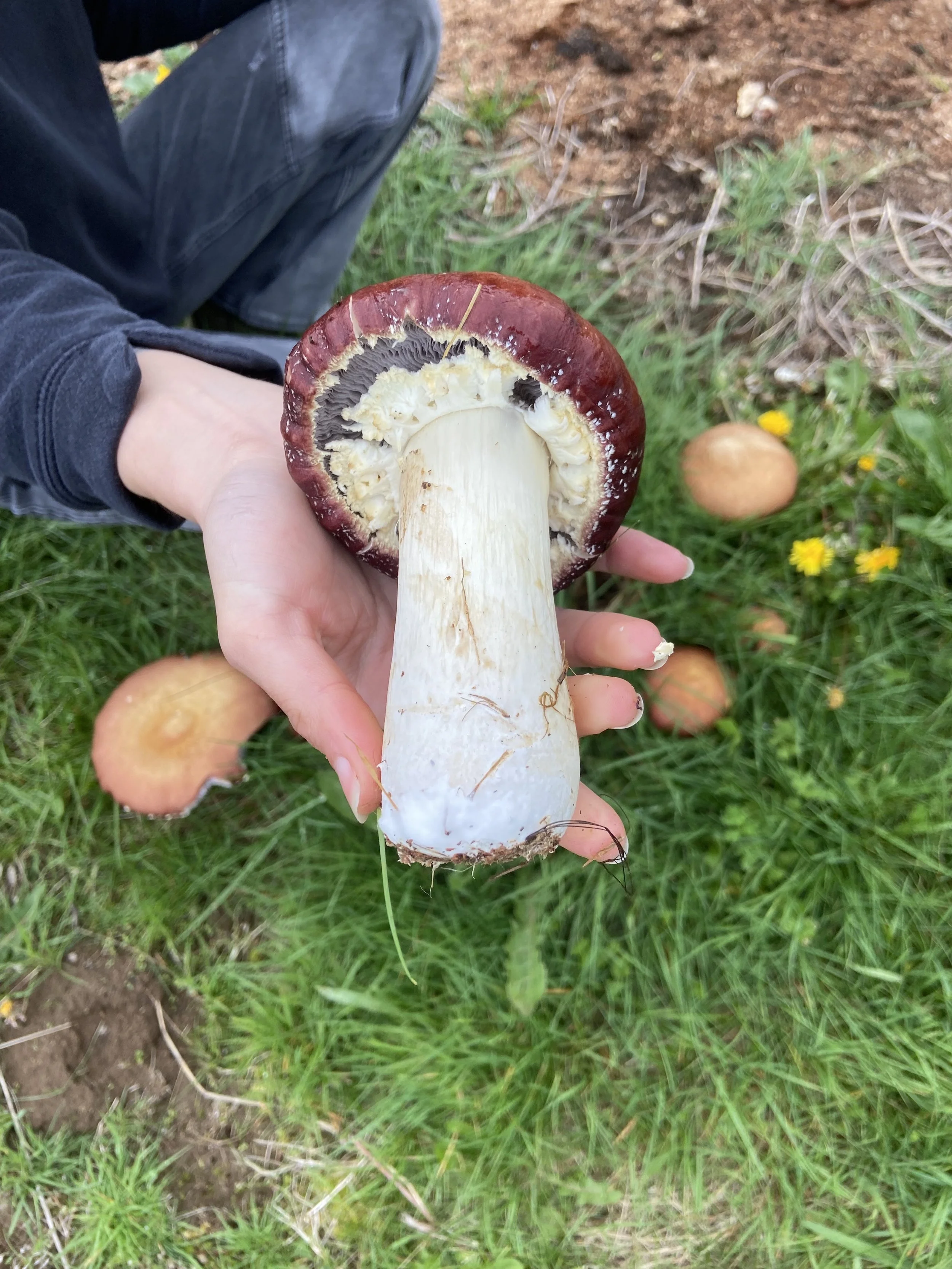
The wine cap has a very earthy flavor and is described like a potato cooked in wine. It has a softer texture than a Portobello, but the same general shape. You do not eat the stems of this mushroom, the stems are stringy and tough and should be composted. This mushroom is wonderful in sauces and meat pairings, lending itself well to savory cooking.
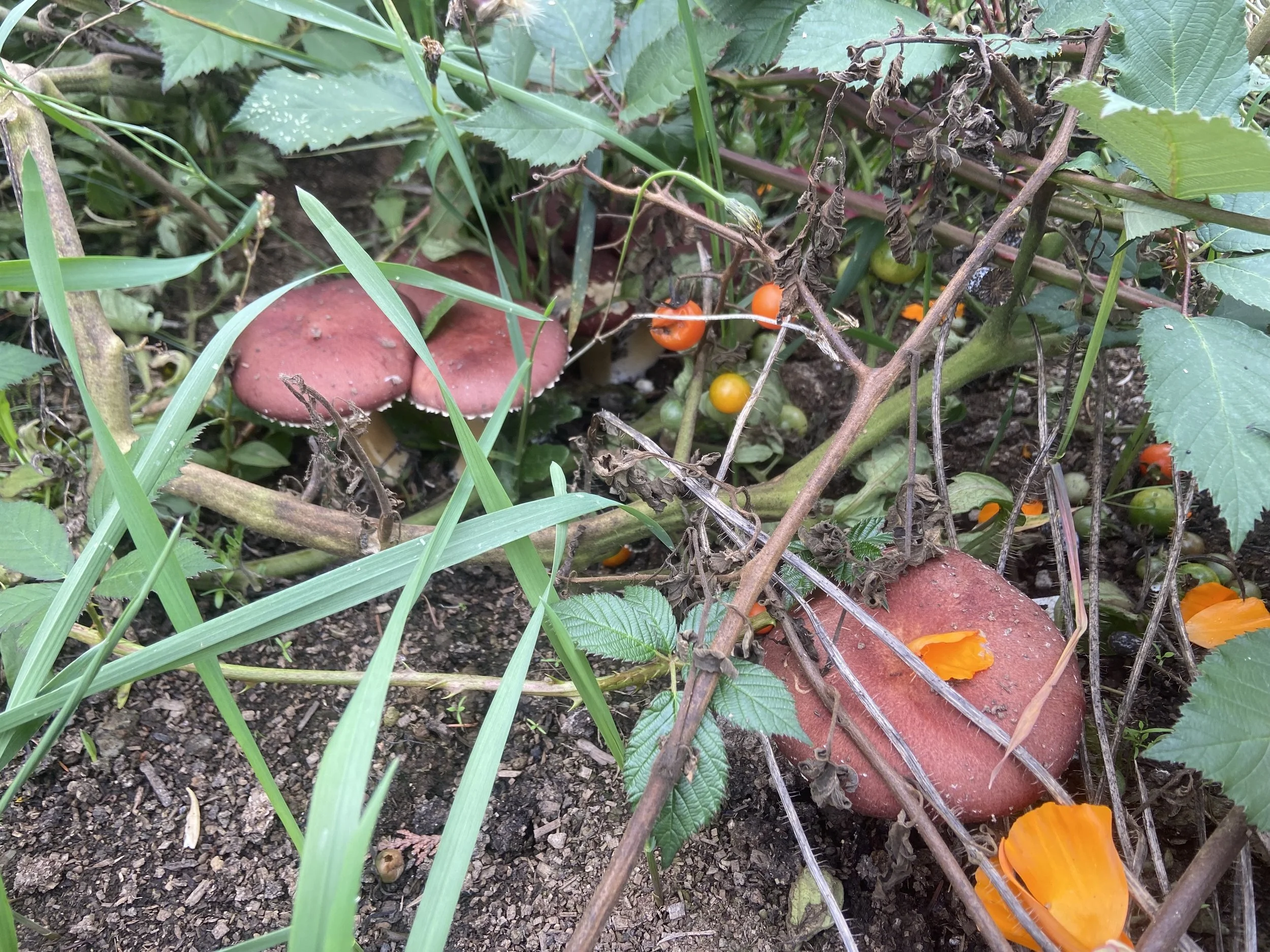
Mycelium is essential to our planets health. Beginning with our soil. Adding mycelium to your garden will increase your plants production in multiple ways, as well as making your vegetables more nutrient dense. Below we’ve lists some ways mycelium accomplishes this statement.
-Mycelia break down organic matter creating fertile new soil.
-Mycelia networks increase water retention which assist plants and trees to become more drought resistant
-Mycelia increase pest and disease resistance and clean toxins such as pesticides, chlorine, and PCBs from soils and groundwater
-Mycelia increase nutrient availability for plants.
-Mycelia reduce erosion by creating a web that holds soil together
-90% of plants have a mutually beneficial relationship with mycelium and fungus. The communication network between plants and fungus is just being discovered and explored.
-Mycelium fruit, better known and mushrooms, attract beneficial bacteria, insects, animals, and gastropods, which in turn, increase the diversity and health of the garden ecosystem and of planted and wild spaces.
-By adding mycelium and mushrooms to your garden or other plantings you are supporting a healthy and diverse soil ecology in addition to building resiliency into these spaces.