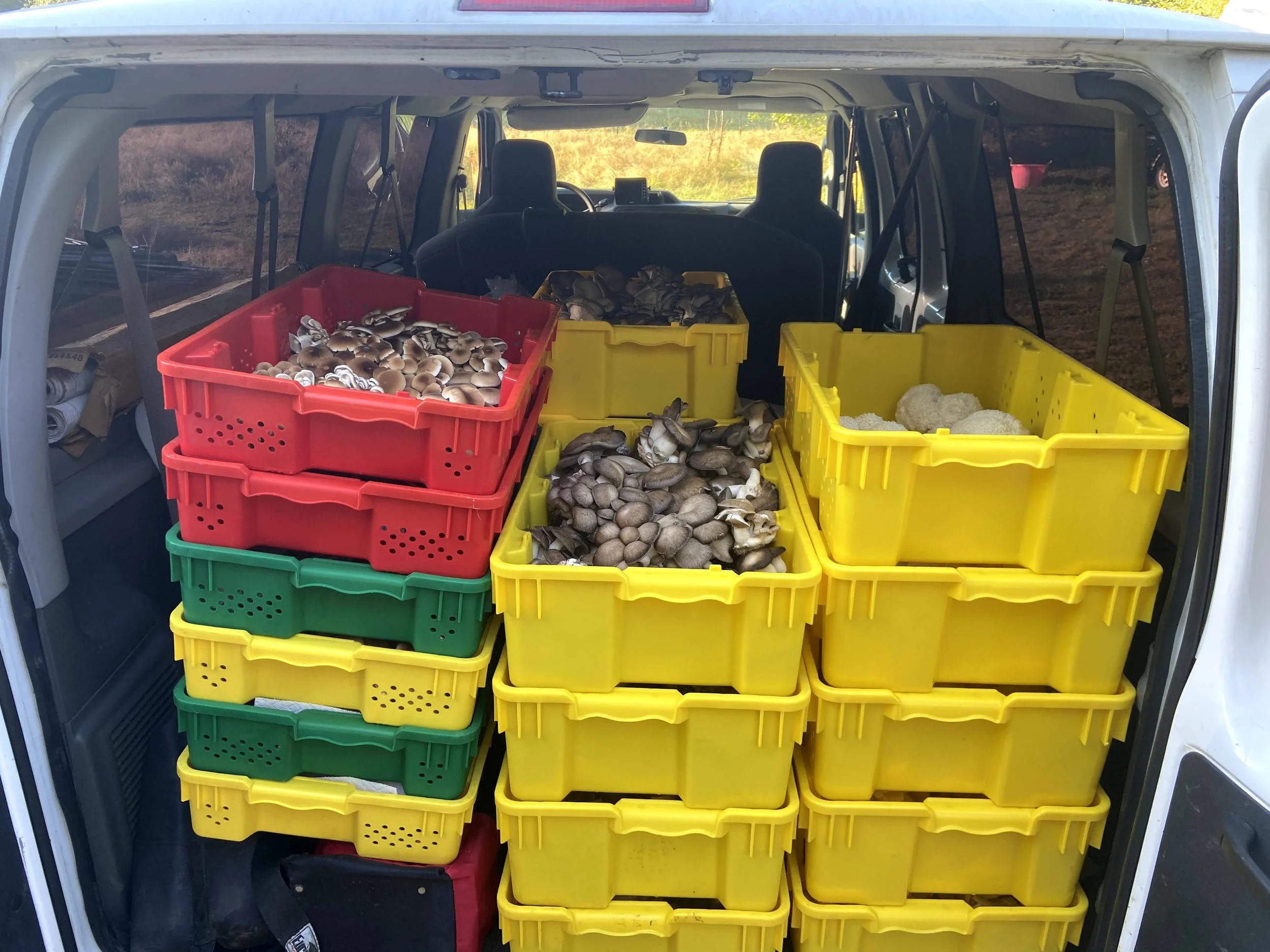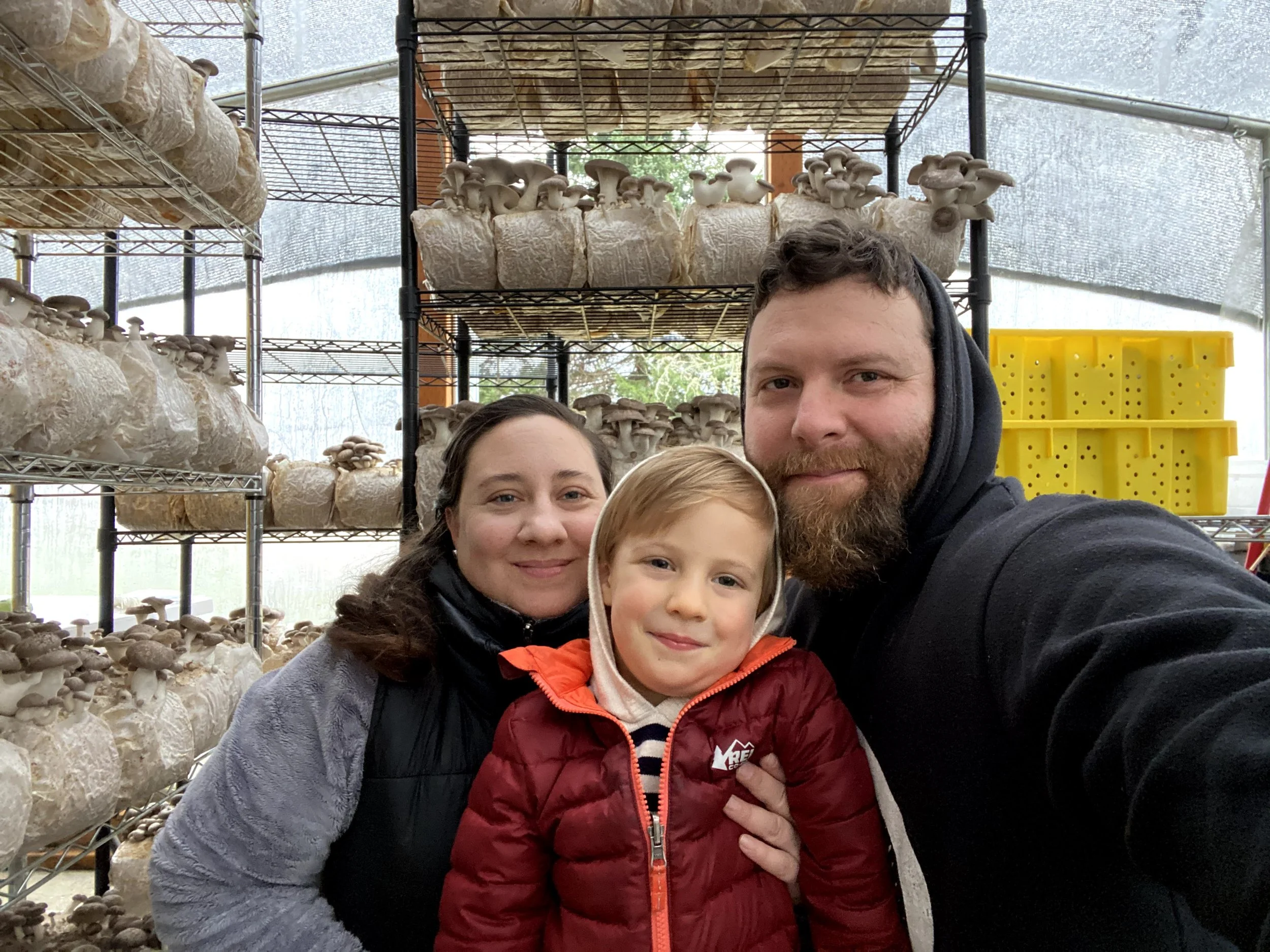
Hello, my name is Mark and my family and I have been focused on building a mushroom farm since 2016. Becoming a farmer has meant more to me than I ever thought it could and being a part of the farmers market community has been a major source of inspiration to continue to expand the farm. We’ve built the operation from the dirt up. We started the farm in a greenhouse with no endwalls, no doors, and weeds that were 6 ft tall. We’ve since expanded to two locations for the farming operations, and purchased 12 acres in 2022 to build a new larger farm that is currently under construction. Through the years we expanded with shipping containers, lean-tos, poured a lot of concrete, we learned how to build pasteurizers, flow hoods, do electrical work, HVAC work, build rooms, create perfect mushroom environments, and so much more. Mushroom farming keeps us very busy and on our toes!
The Beginning :
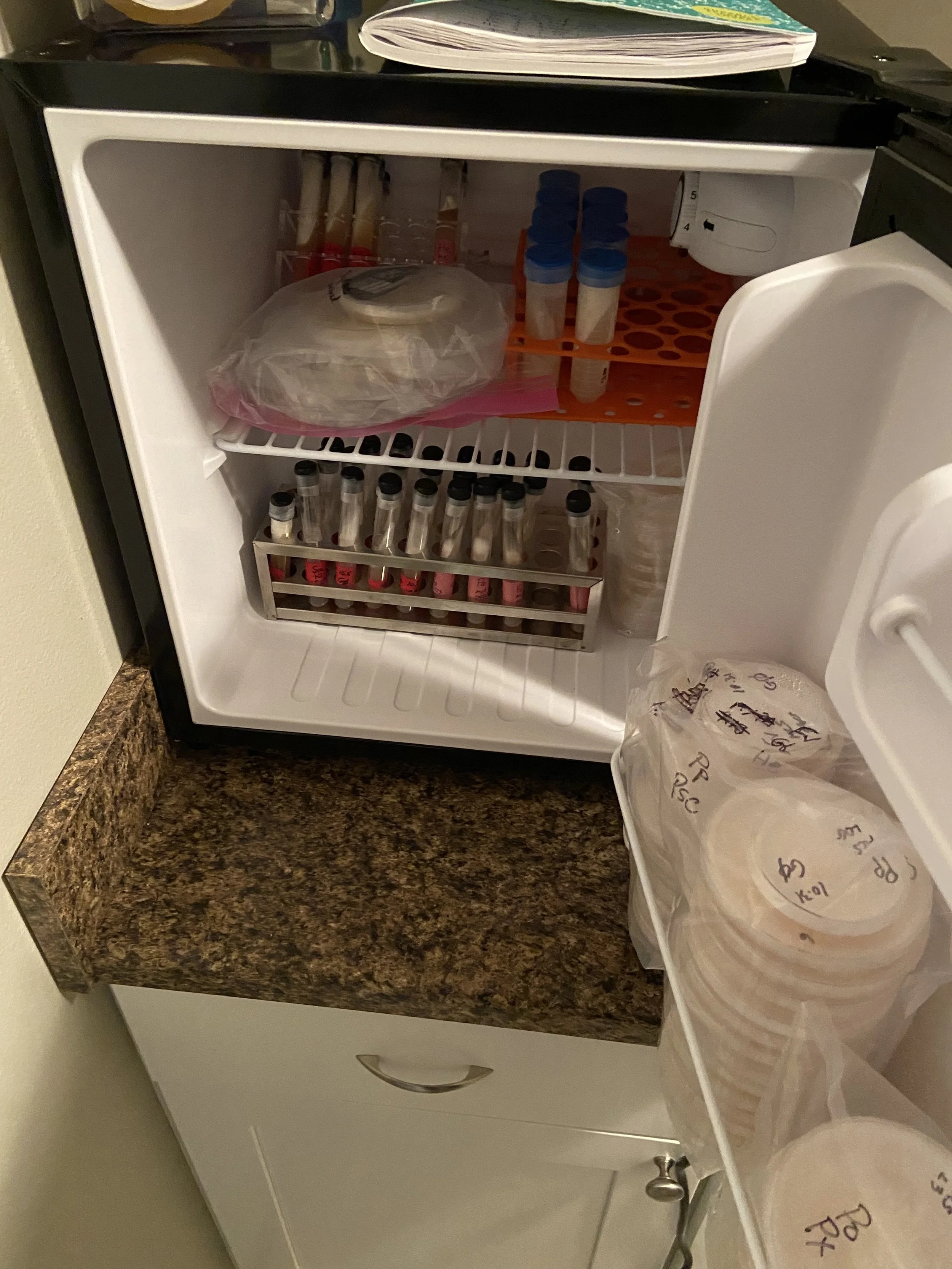
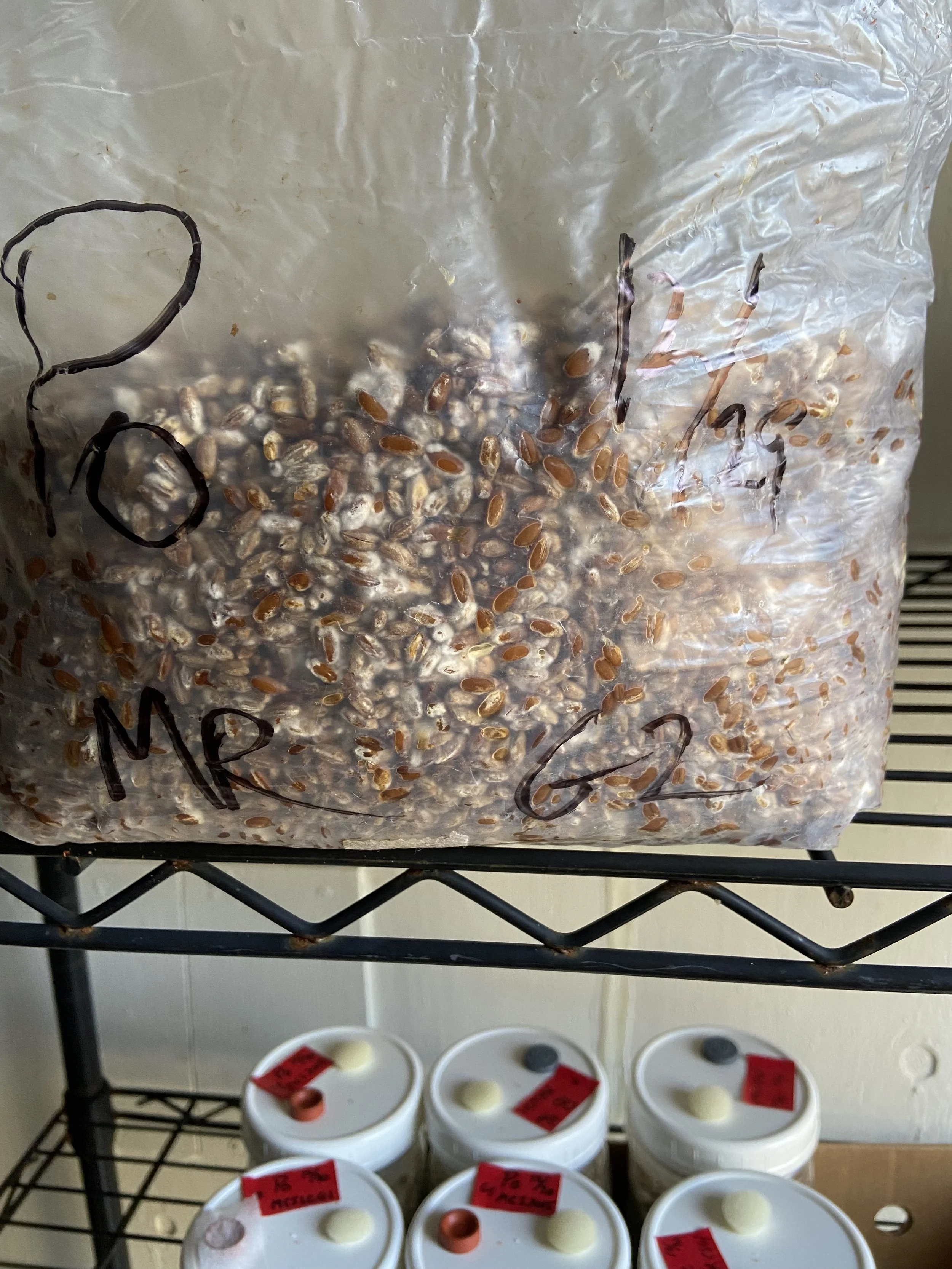
Mushroom farming begins at the lab with tissue culture, liquid culture, grain sterilization and spawn creation. Each variety’s genetics is purchased from other farms or companies that specialize in mushroom culture. The fresh culture is expanded into 10-12 slants that we use to always have the youngest and freshest culture possible in our spawn production each month. Each month a new slant is taken out of the fridge and the mycelium is put onto a petri dish to grow, and once expanded it will be used to create grain master jars or liquid culture, depending on what species we are using. After the grain master or liquid culture has colonized we sterilize 3-5 lbs of rye grain or rolled oats and once cooled the two are mixed to create spawn for bulk substrate inoculation. Contrary to the general belief that mushroom farms have to be super clean, the lab portion of farming, and inoculation are the times that need the most care in regards to cleanliness as one single mold spore, or single bacteria can ruin thousands of dollars of bulk substrate down the line.
The Middle :
The next step to producing mushrooms is to prepare the bulk substrate for the mycelium to colonize/eat, and produce mushrooms from. At our farm we start with Red alder or Maple sawdust. Organic Soybean hulls and wheat bran are added (many other things can be used) to give the mushrooms more nutrients to increase the speed at which the mycelium colonizes and is ready for fruiting, and also to increase the yield. We mix the substrate and hydrate it by adding water. After the substrate is prepared we bag it and pasteurize the filled bags. We pasteurize to kill off most of the bacteria, fungus, mold etc. already present on the substrate to give the mycelium an easy source of food it doesn’t have to fight for.
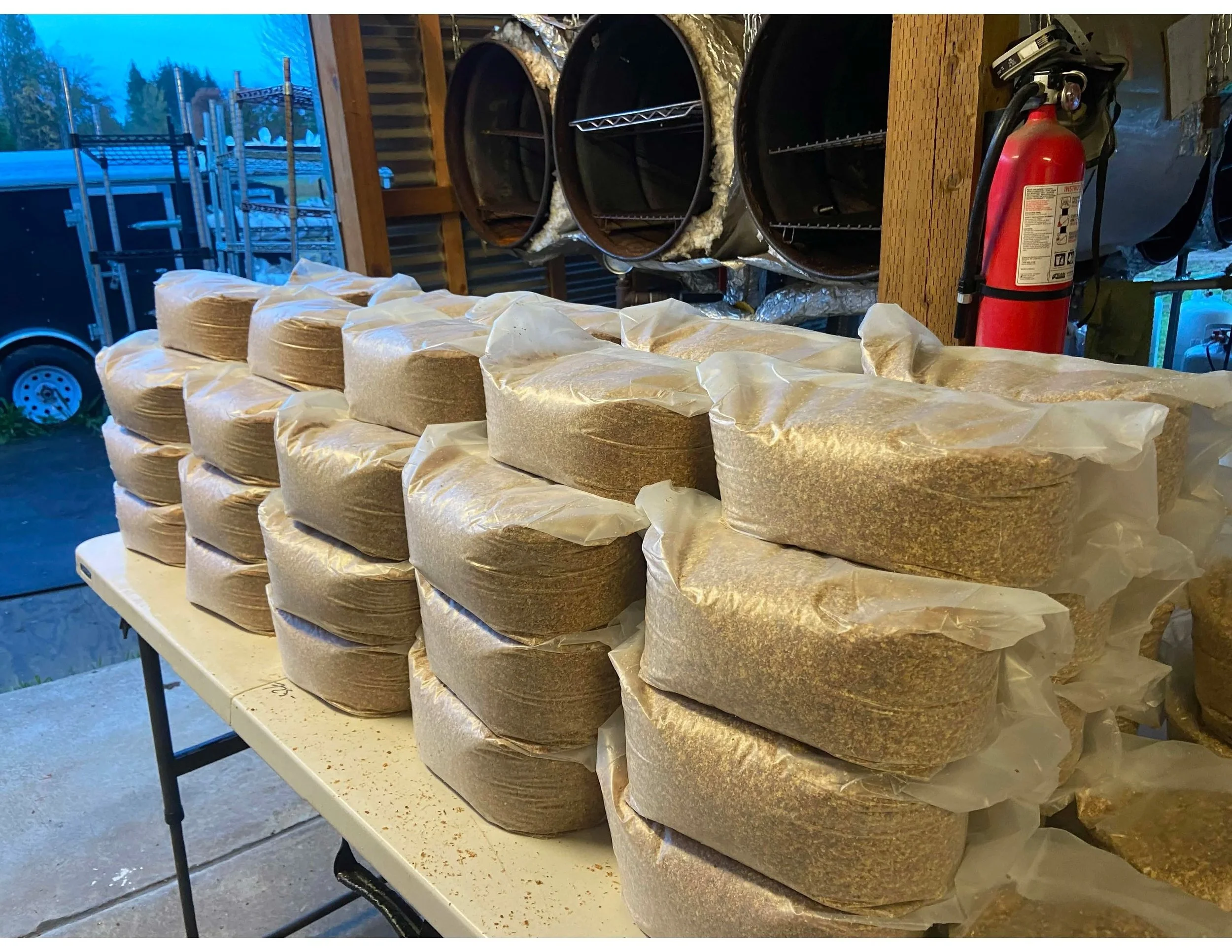
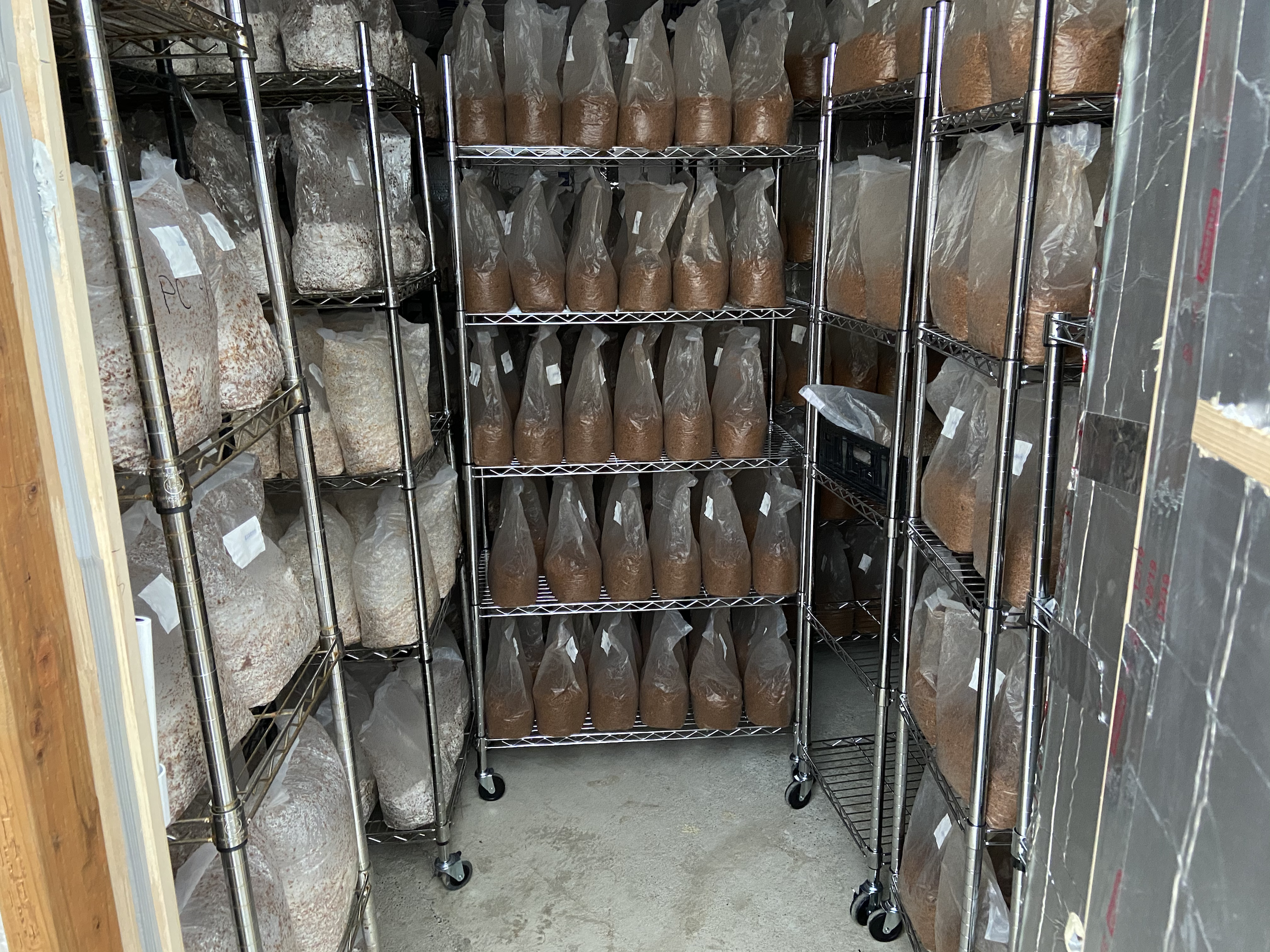
Once pasteurized and then cooled to 90 degrees F, we inoculate each bag with spawn. After each bag is inoculated they are individually sealed with an impulse sealer and stacked on a rack and rolled into an incubation room and left of so the mycelium can colonize the substrate. Incubation takes place from 10 days to 100 days depending on the variety grown and the incubation environment is kept at a consistent 70 degrees F and as little light as possible to prevent premature pinning in the bags. The ideal temperature of incubating mycelium is 80-82 degrees but it is imperative the incubation room be kept at 70 degrees. Mushroom are thermogenic and can kill themselves by overheating. The internal temperature of the colonizing bags are usually 8-12 degrees warmer than the room temperature. And any internal temperatures above 85 degrees will result in bacteria blooms that spoil production blocks, or slow the growth and reduce the yield of production blocks. Our nose is our best tool for determining this contamination as many types of contamination generate particular smells that are very recognizable.
The Finish :
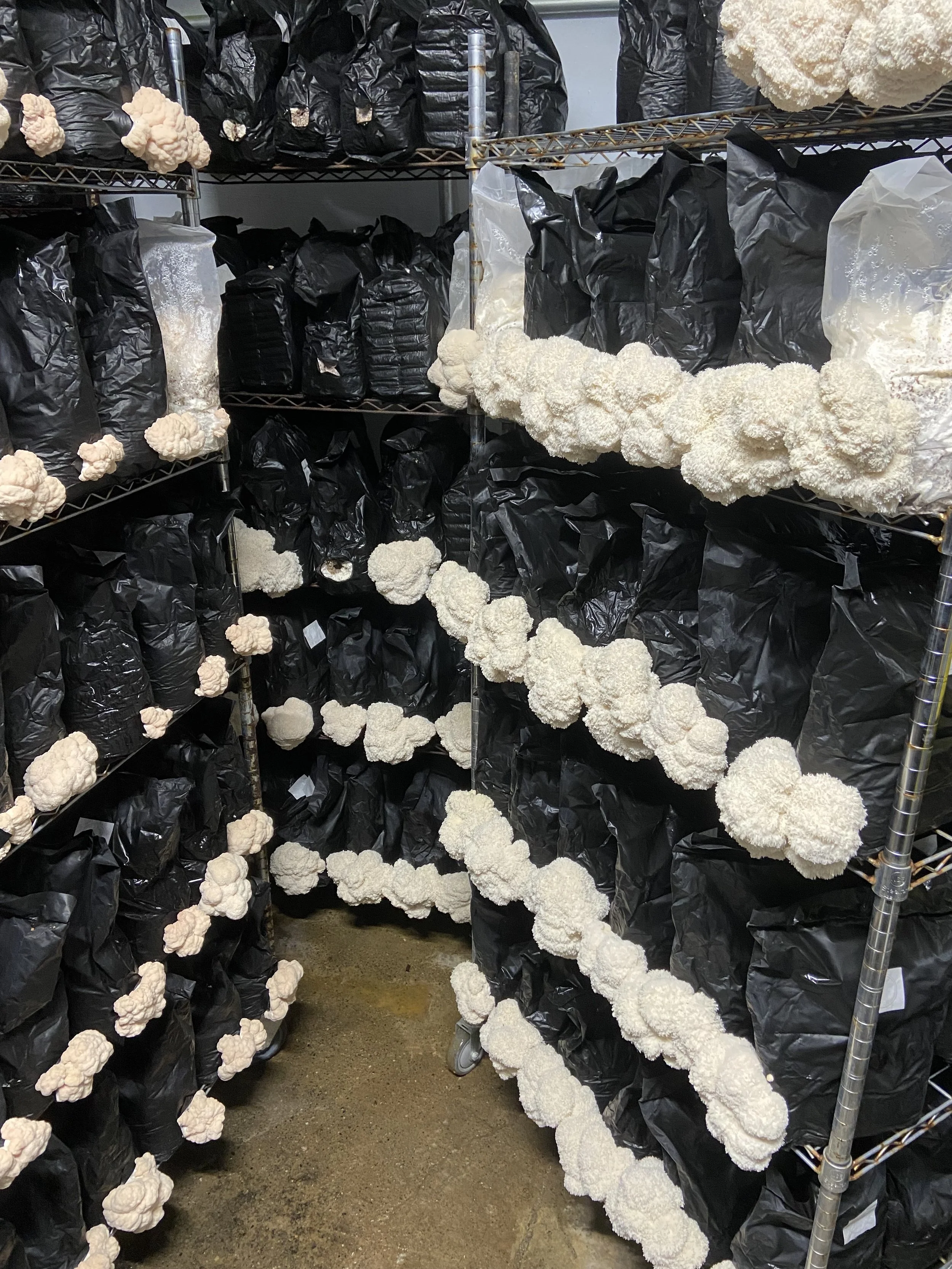
Fruiting the mushroom blocks is the final stage of production. Mushroom formation, for our varieties, requires stable temperatures around 60 degrees F and a humidity around 90%. Mycelium produces CO2 when colonizing substrate and when producing mushrooms, so the grow environment needs a consistent supply of fresh air to grow properly as high CO2 will produce malformed mushrooms for most varieties. Maintaining atmospheric CO2 levels, while maintaining 60 degrees and 90% humidity can be challenging when you have a room full of thousands of blocks producing CO2! All three major environmental conditions are monitored and controlled with sensor equipment. Constant monitoring and years of experience means we can usually catch a growing problem early before it affects the mushrooms. Any one of these environmental variables out of balance can lead to major production issues. Each variety stays in the grow room for different lengths of time, usually from 2 - 5 weeks. Some varieties need to be “shocked” into production, at our farm we roll them into the walk-in cooler overnight and then they go into the grow room. Harvesting is simple, just grasp the base of the mushroom or mushroom clump and twist or bend it 90 degrees. It will break off with some substrate attached, and leaving the substrate on will increase the shelf life of the mushrooms. Harvested mushrooms are immediately refrigerated to ensure the longest shelf life.