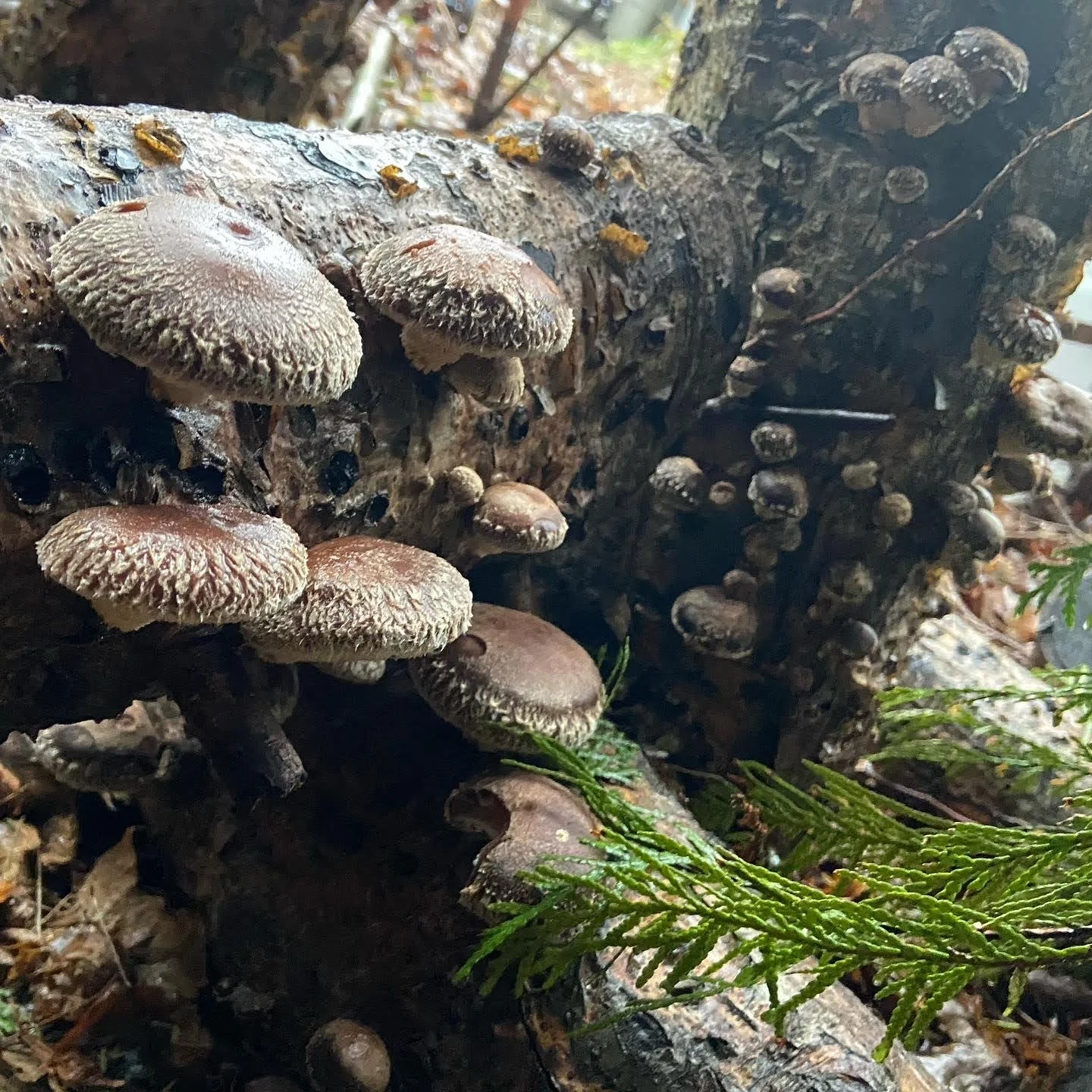
Growing mushrooms on logs
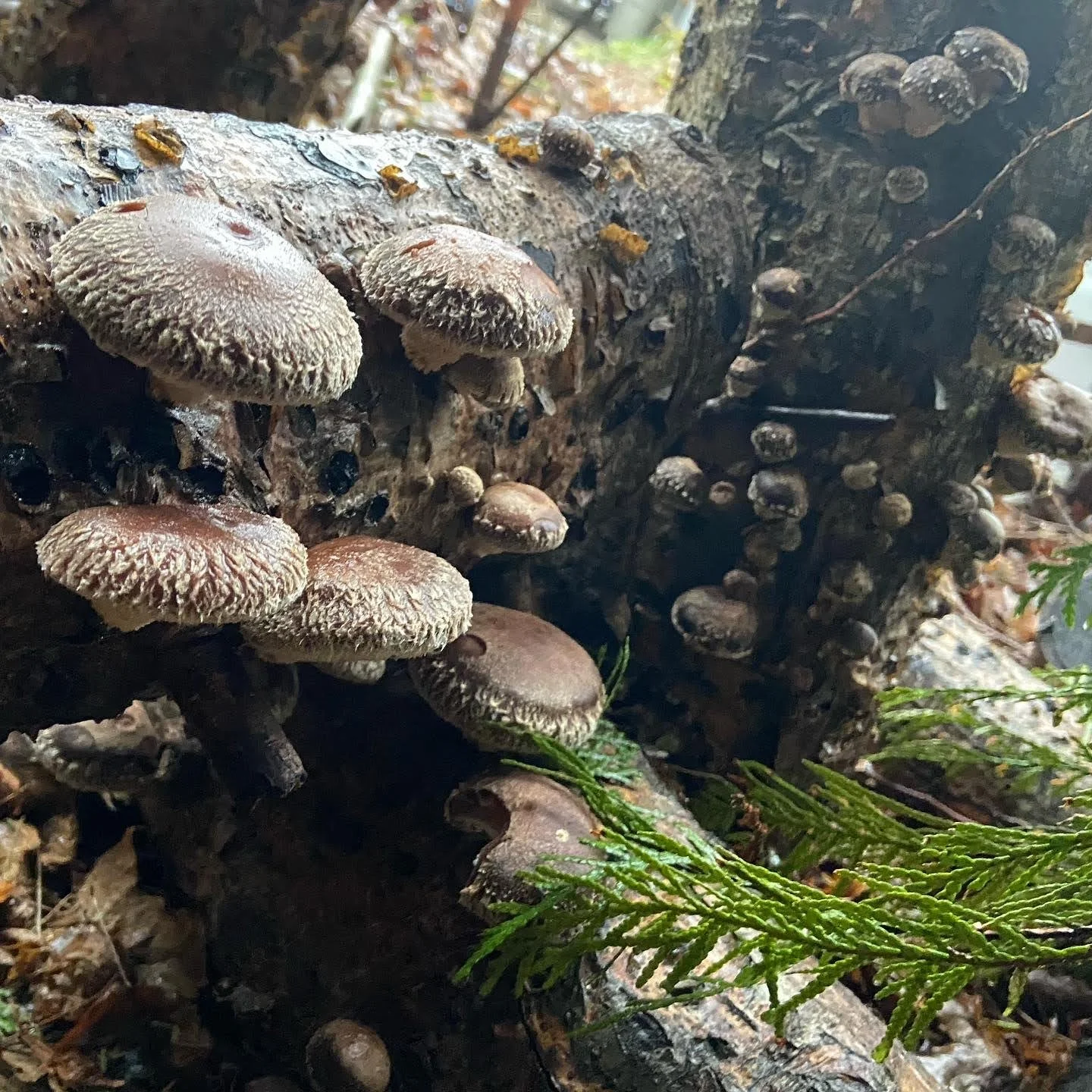
Growing mushrooms on logs is a fun and rewarding endeavor. This growing method requires little to no maintenance after the initial labor input, and can produce mushrooms reliably for years. What this mushroom cultivation technique requires :
dowels
drill bit sized for dowel so make sure you have this info!
hammer
bee’s wax (best), or paraffin
Logs
a way to heat the wax, an old crock pot or bunsen stove etc..
location for them to grow
The procedure is simple :
Do not remove the bark from logs you intent to use for cultivation. Try not to damage the bark of logs you have. Use wood that is no older than 2 months cut and no fresher than 10 days since it was cut down. Stumps can be much older but there are many variables to take into account for this like type of wood, size of stump, location etc… shoot us an email to discus this further if you’re interested in inoculating stumps and when inoculating a stump use double the amount of dowels and decrease their spacing by 1/2.
Drill holes 4”-6” apart around the log, offsetting each vertical column of dowels you drill with the column to next to it so that you have a diamond pattern of dowels wrapping around the log when you are done.
Don’t place dowels closer than 4” to the edge of the log, and try to avoid plugging right next to branch cuts or bark damage.
Drill the holes, use tape or a depth setter to make sure the holes are as close to the exact depth of the dowel length as possible, you want to avoid trapping air pockets beneath the dowel when you seal it in.
Cover each inoculation point with a dab of bee’s wax. You can seal the cut ends with wax as well if you want, we have sealed them and left them unsealed and haven’t noticed markedly different results in production or longevity.
Find a spot to store your logs. I keep mine under deciduous trees, so the rain will get through to the logs underneath. You can stack them any way you like, there are many preferred methods. You want some dappled light or full shade but no direct sun.
Make sure during the summer months you find the time to water the log once or twice a week. The cut log is like a sponge and a thorough watering will soak up the water and hold onto it for a long time. Failure to water will result in less longevity and yield.